

2026-03-15T07:39:18
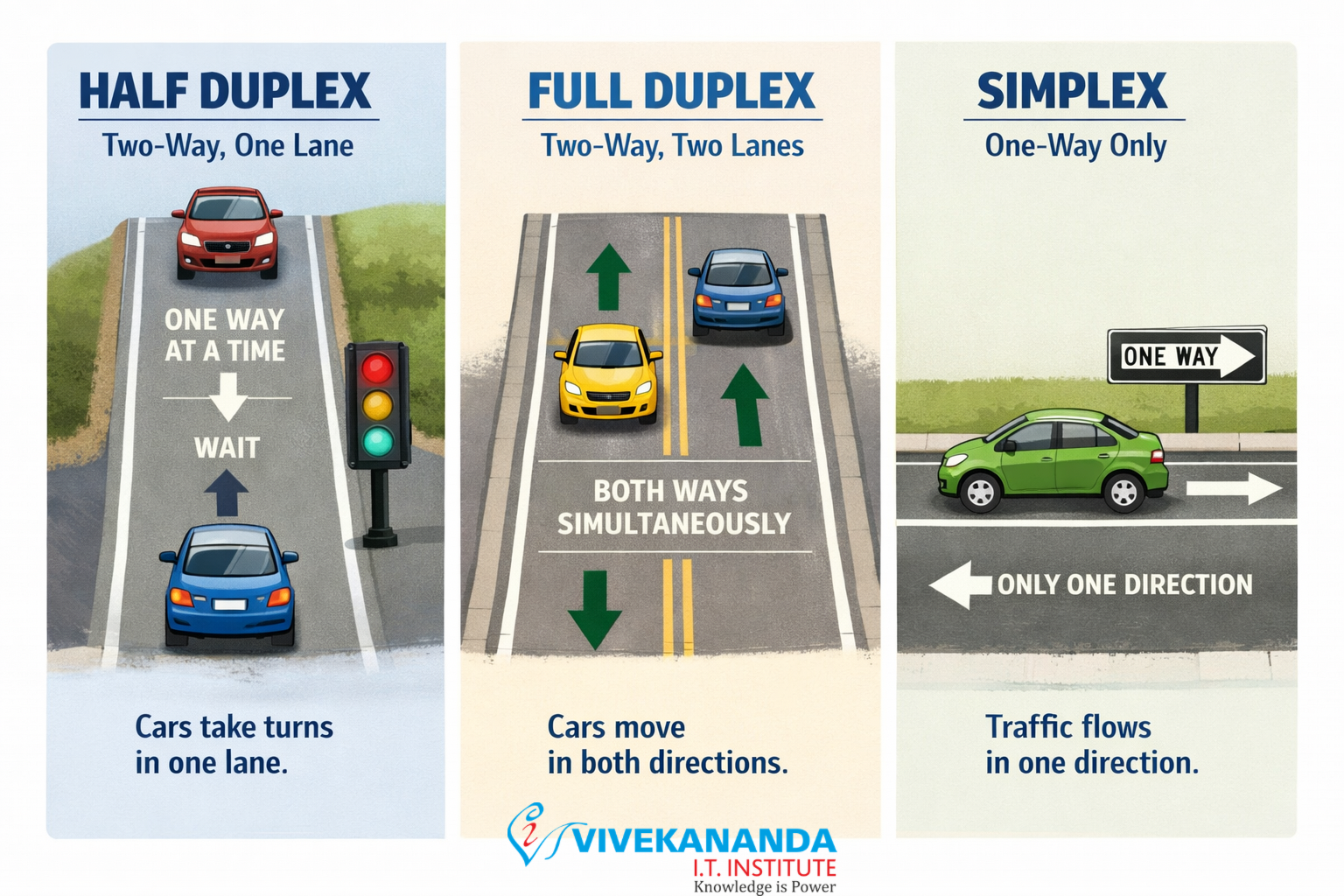
Half Duplex vs Full Duplex vs Simplex Communication In computer networking, data can travel between devices in different ways. The three basic communication modes are Simplex, Half Duplex, and Full Duplex. The image above explains these concepts using a road traffic analogy, which makes it easier to understand how data flows between devices. ⸻ 1. Simplex Communication (One Way Only) In simplex communication, data flows in only one direction. One device always sends data while the other only receives it. Just like a one-way road, traffic moves in a single direction and never comes back the other way. Examples • Keyboard sending data to computer • TV broadcast • Radio transmission In networking terms, the sender cannot receive feedback while sending. ⸻ 2. Half Duplex Communication (Two Way, But One At A Time) In half duplex communication, both devices can send and receive data, but not at the same time. Think of it like a single lane road where cars take turns. One side must wait while the other side passes. Examples • Walkie-talkies • CB radios • Older Ethernet hubs When one device is transmitting, the other must wait before sending its data. ⸻ 3. Full Duplex Communication (Two Way Simultaneously) In full duplex communication, both devices can send and receive data at the same time. This is like a two-lane road where vehicles move in both directions simultaneously. Examples • Phone calls • Modern Ethernet networks • Video conferencing systems Full duplex communication increases efficiency because data flows continuously in both directions. Why This Concept Is Important in Networking Understanding communication modes helps in: • Designing network infrastructure • Improving data transmission efficiency • Understanding Ethernet and wireless communication • Learning cybersecurity and network protocols For networking students and cybersecurity professionals, these concepts are part of the foundation of data communication.
Have a question? Ask here!
Required fields are marked *